
Hi, my name is Ajit Nathaniel, and I’m a cameraholic.
Since 2019, I have bought a large number of film cameras and vintage lenses. Having proclaimed myself a “vintage digital” enthusiast, I’ve also acquired a number of digital cameras manufactured between 2000 and 2014.
Though my first digital interchangeable lens camera was the Fujifilm X-T3, I have mostly collected full frame Nikons and Canons. The Nikon D700 and the Nikon F2 are at the core of my “system” for day-to-day shooting. Shooting full frame bodies, I have often been on the gasbag side of the Full Frame versus APSC debate, arguing the subjective advantages of full frame gear and the “razor thin Depth of Field” of my F1.4 and F1.2 lenses. With a little bit of experience that opened my eyes to the serious limitations of wide aperture lenses, I’ve certainly matured in my opinion of smaller sensors. However, due to the high cost of even the most basic bodies and lenses, I was never able to get any meaningful experience with Micro Four Thirds (“MFT”) bodies.
A few months prior to writing, my neighbour visited an E-Waste dump, and found a first generation Olympus EM5 dropped off for disposal. Somewhat surprised, he picked it up and passed it on to me, thinking that it was something I could add to my collection. I didn’t do much with it initially, because it didn’t have a body cap, lens, or even batteries. I thought that whoever chucked it out had a good reason to do so.

One day my Ebay alerts kicked in, and I was able to get a battery and charger from China for a very good price. While I waited for these to arrive, I bought the 7Artisans 18mm F6.3 “cookie” lens as a test. My initial tests were encouraging. Since I own a number of 7Artisans lenses, I know what to expect – they’re generally competent optics with “character”. Coupled with the tiny Olympus kit lens that I bought separately, I got some pretty good 1990s film style images. This initial experience enthused me enough to buy the Lumix 12-42 kit lens for this camera. After this though, this camera fell off my radar for a bit. My main kit for walkabout photography is the Fujifilm X-T10 with the Fujinon 27 mm pancake lens. This setup does pretty much what I want it to. While the EM5 sat on my desk, I never really got around to using this seriously.

At the end of June 2024, I embarked on a business trip that would see me visit several cities in Northern India. My typical travel kit comprises the Nikon D700, the AF Nikkor 28-105 F3.5-4.5D, and the Nippon Kogaku O-Auto 35 mm F/2 AI-converted prime lens. Alternatively, when space is severely restricted, I would travel with the Fujifilm X-T3 and the Fujinon XF 18-55 F2.8-4 WR OIS lens. This time though, with the trip expected to be quite long, I didn’t have the space even for the latter, and decided that I would have to rely on my phone for any photos that I may want to take. However, with the car waiting to take me to the airport, I stuffed the EM5 with the Lumix 12-42 lens into my bag.

This turned out to be a good decision. My trip took a couple of unexpected turns, and I ended up visiting Chandigarh and Manali in addition to Delhi. Through this trip, having this light and compact camera helped me get pictures that I wouldn’t have got with my D700. After being on the road with this camera for 19 days, I realised that MFT has a place in every photographer’s kit bag, and I felt a tiny bit of regret for trolling MFT users in the past (albeit good-heartedly). I will always have an MFT body with me, and this is why.

Size:
My EM5 is tiny, and can go with me everywhere. Since returning from my trip, I have acquired the Olympus Zuiko 14-42 EZ lens. This setup is really tiny, and gives me greater versatility than my Fuji X-T10 + 27 mm setup. Now I love the X-T10 – especially the in-camera monochrome with the contrast turned up, so I’m unlikely to let it go anytime soon. Also, the pop-up flash on the X-T10 makes it a brilliant party snapper with the 27 mm. However, the EM5 is here to stay. The compact zoom in that form factor and reasonably large sensor really makes a great camera.
Low Light:
I have a cupboard and a half full of primes from F/0.95 to F/2, the mere mention of a lens slower than F3.5 triggers an involuntary sneer. With the 14-42 having an aperture range of F3.5 to 5.6, I was wondering what I would do when the clouds came out and the iPhonesters would smugly continue clicking away. However, here too, I was pleasantly surprised. Thanks to the IBIS in the body and the OIS in the lens, I had acceptably sharp images at a shutter speed of 1/15. Later, looking at my images on a 27 inch 4k display, I realised that even at ISO 3200, the noise was quite low – certainly better than the X-T10 from the same era. Since then, I’ve used auto-ISO with no hesitation at all.

Colour Science:
One of the reasons that I really enjoy older digital cameras is the colour science baked into them. The tuning to resemble iconic film stocks is something we lost with most cameras once sensor dynamic range crossed 14 ev with the Sony A7II. As a person who shoots monochrome ninety per cent of the time, I like my colour images to be unrealistically oversaturated like something out of The Wizard Of Oz. Here too, the EM5 did not disappoint. While the colours straight out of camera are mildly oversaturated, bumping colour in-camera sends you straight down the Yellow Brick Road.

Monochrome did not disappoint either. Bumping up the contrast got me exactly what I wanted straight out of camera almost every time, just like it does with my X-T10 and X-T20.
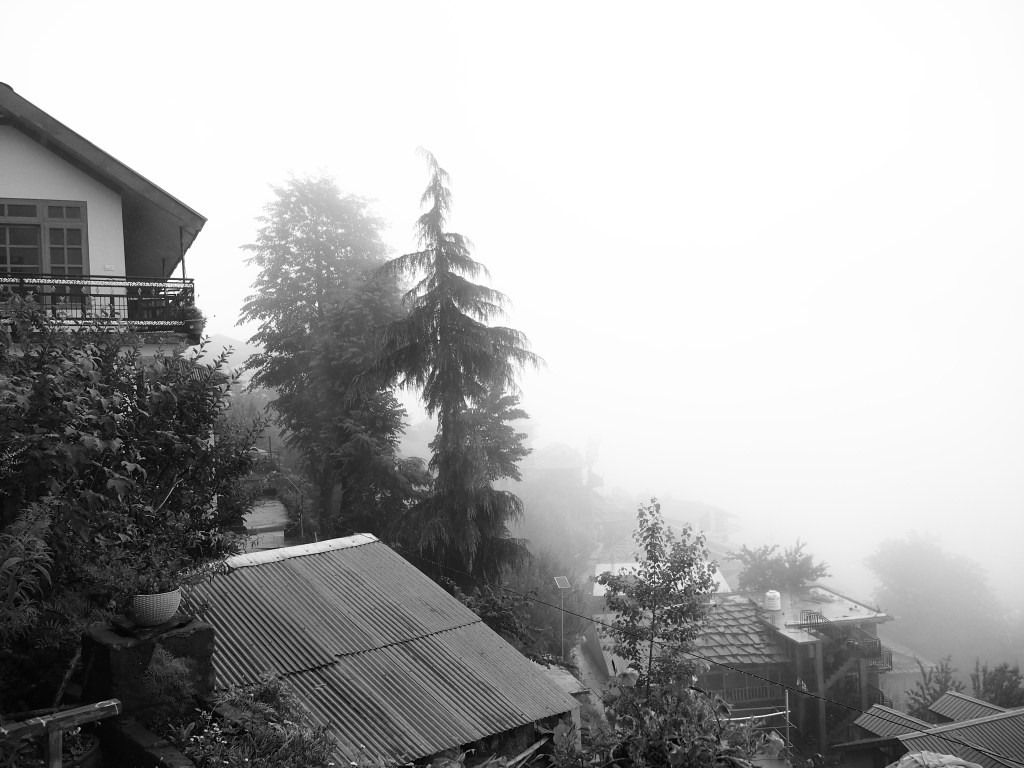
Olympus EM5 + Lumix Panasonic Lumix G Vario 14-42mm F3.5-5.6 II ASPH Mega OIS (SOOC JPG)
Other Aspects
I may be expanding my MFT kit soon. Given the small sensor, the Olympus 200-400 lens is very attractive, as it would allow me to shoot sports and wildlife quite economically. The brilliant burst mode – around 10 frames per second by my estimate – is perfect for pets, kids, and sports. The cost of getting into the 600mm to 800 mm focal length range on full frame costs about three pints of unicorn blood and the partridge in the pear tree. Even on APSC, Fuji seems to be the only brand that has something in that range with a somewhat palatable cost. However, considering IBIS + OIS and the size and weight of the entire setup, MFT wins on all fronts if you can get over your small sensor hangups.
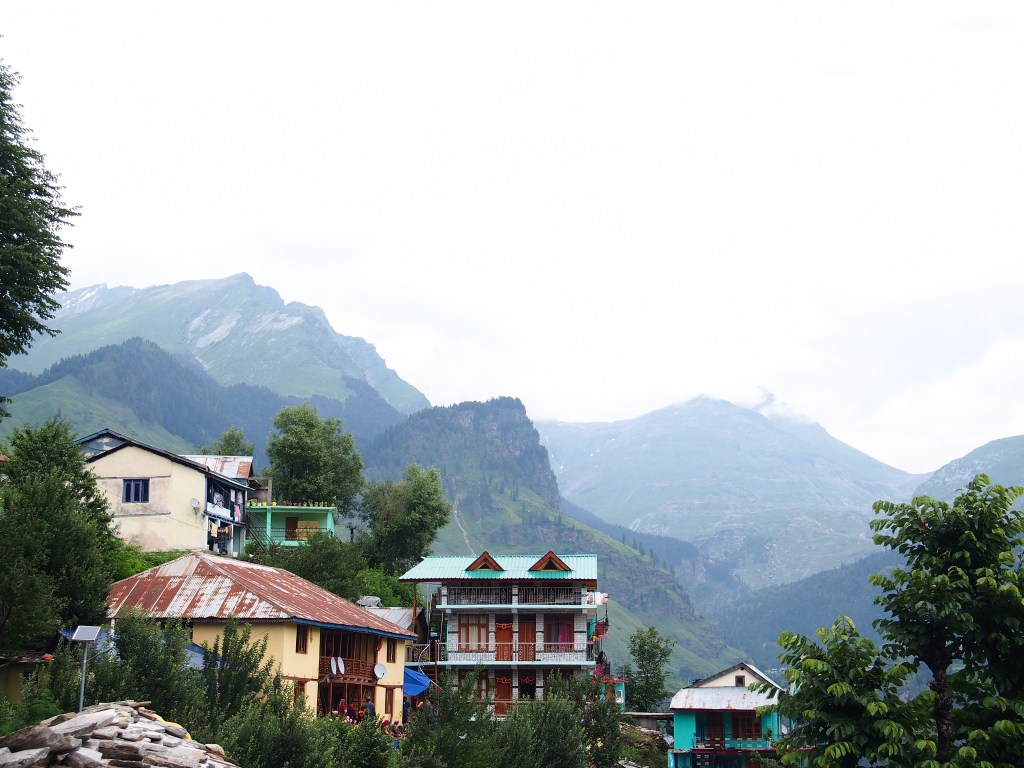
Olympus EM5 + Lumix Panasonic Lumix G Vario 14-42mm F3.5-5.6 II ASPH Mega OIS (SOOC JPG)
 Clikte